
They come in all different sizes, shapes and colours. The seed is an
embryonic plant itself and the origin of nutrition. A plant goes to
great lengths to produce each seed and fill it with high concentrations
of vitamins, minerals, proteins, essential oils and dormant enzymes. If
you’re looking for a high quality, nutritious and filling snack, seeds
are tough to beat. Let’s look at the ten healthiest seeds on Earth and
how to consume them.
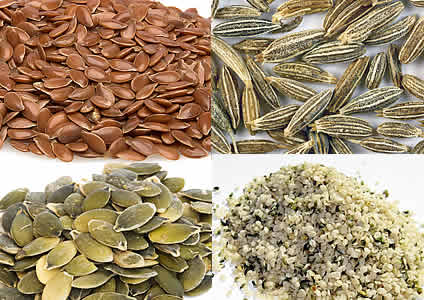
How to Eat Seeds
There is only one way to derive nutrition from seeds and that is to eat them raw. Once they are exposed to heat, they produce toxic substances and the vitamin, mineral and essential oil profiles are denatured. By roasting a seed, its classification moves from a living food to a dead food. There is no seed on earth that can withstand roasting or heating without breaking down its nutritional components. Always remember, eat seeds naturally…eat them raw. This also means they can be soaked, ground or mashed (i.e. tahini), especially if a seed’s shell or coat is too difficult to pierce with the teeth.
- Choose raw and unsalted seeds
- Avoid coated or roasted seeds
- Avoid sugar coated seeds
The 10 Healthiest Seeds on Earth
1) CHIA SEEDS
Serving Size = 1 Tsp
Consider these facts about Chia seeds:
- 2.5 times more protein than kidney beans
- 3 times the antioxidant strength of blueberries
- 3 times more iron than spinach
- 6 times more calcium than milk
- 7 times more vitamin C than oranges
- 8 times more omega-3 than salmon
- 10 times more fiber than rice
- 15 times more magnesium than broccoli
The seeds are loaded with vitamins and minerals, are an excellent source of fibre, protein and antioxidants, and are the richest plant source of omega-3 fatty acids. Consumption of chia seeds could help reduce joint pain, aid in weight loss, deliver an energy boost and protect against serious ailments such as diabetes and heart disease.
The seeds are gluten-free, which also makes them appealing to people with celiac disease or an aversion to gluten.
Consumption of chia seeds may increase blood levels of the long chain omega-3 EPA by 30%, says a new study from the Appalachian State University and the University of North Carolina.
Chia seeds are a source of alpha-linolenic acid (ALA), a type of “short-chain” omega-3 fatty acid, whereas fish is a source of the “long-chain” fatty acids eicosapentaenoic acid (EPA) and docosahexaenoic acid (DHA). While growing research has linked consumption of EPA and DHA to heart health, improved brain function and possible other health benefits such as improvement in depression or rheumatoid arthritis, studies are now suggesting that ALA may bring about redistribution associated with heart and liver protection.
Consumption of chia seeds as a source of alpha-linolenic acid (ALA) may bring about redistribution associated with heart and liver protection.
The top benefits of chia seeds are far reaching and as far as superfoods go, this is undeniably one of the top ten.
2) HEMP SEEDS
Serving Size = 1 Tbsp
More people are discovering the nutritional benefits of hemp seed, nut and oil.
Hemp contains:
- All 20 amino acids, including the 9 essential amino acids (EAAs) our bodies cannot produce.
- A high protein percentage of the simple proteins that strengthen immunity and fend off toxins.
- Eating hemp seeds in any form could aid, if not heal, people suffering from immune deficiency diseases. This conclusion is supported by the fact that hemp seed has been used to treat nutritional deficiencies brought on by tuberculosis, a severe nutrition blocking disease that causes the body to waste away.3
- Nature’s highest botanical source of essential fatty acid, with more essential fatty acid than flax or any other nut or seed oil.
- A perfect 3:1 ratio of Omega-6 Linoleic Acid and Omega-3 Linolenic Acid — for cardiovascular health and general strengthening of the immune system.
- A superior vegetarian source of protein considered easily digestible.
- A rich source of phytonutrients, the disease-protective element of plants with benefits protecting your immunity, bloodstream, tissues, cells, skin, organs and mitochondria.
- The richest known source of polyunsaturated essential fatty acids.
According to the hemp growers industry, industrial hemp grown for food, fuel and natural fibers contains virtually no THC (less than .3%).
In fact, when hemp is processed into hemp seed oil and hemp seed milk, for example, it further reduces the minute amount of THC in hemp.
And yet, there’s still a stigma due to the long-standing idea that hemp and marijuana are one in the same. Hemp is actually categorized with marijuana as part of the Controlled Substances Act of 1970 and is therefore illegal to grow in the US.
The best way to insure the body has enough amino acid material to make the globulins is to eat foods high in globulin proteins. Since hemp seed protein is 65% globulin edistin, and also includes quantities of albumin, its protein is readily available in a form quite similar to that found in blood plasma. Eating hemp seeds gives the body all the essential amino acids required to maintain health, and provides the necessary kinds and amounts of amino acids the body needs to make human serum albumin and serum globulins like the immune enhancing gamma globulins. Eating hemp seeds could aid, if not heal, people suffering from immune deficiency diseases. This conclusion is supported by the fact that hemp seed was used to treat nutritional deficiencies brought on by tuberculosis, a severe nutrition blocking disease that causes the body to waste away.
3) POMEGRANATE SEEDS
Serving Size = 1/2 Cup
Pomegranates are a rich source of antioxidants. Therefore, it helps to protect your body’s cells from free radicals, which cause premature aging.
In simple words, pomegranate juice pumps the level of oxygen in your blood. The antioxidants fight free radicals and prevents blood clots. This eventually helps the blood to flow freely in your body in turn improving the oxygen levels in your blood.
Pomegranates are especially high in polyphenols, a form of antioxidant purported to help reduce the risk of cancer and heart disease. In fact, pomegranate juice, which contains health-boosting tannins, anthocyanins, and ellagic acid, has higher antioxidant activity than green tea and red wine.
The pomegranate, with its edible seeds inside juicy sacs, is high in vitamin C and potassium, low in calories (80 per serving, which is just under one-third of a medium fruit), and a good source of fibre.
The antioxidant properties of a pomegranate prevent low-density lipoprotein cholesterol from oxidizing. This essentially means that pomegranates prevent the hardening of the artery walls with excess fat, leaving your arteries fat free and pumping with antioxidants.
“Mice that drank pomegranate juice were able to significantly reduce the progression of atherosclerosis, [by] at least 30 percent,” said study co-author Dr. Claudio Napoli, a professor of medicine and clinical pathology at the University of Naples School of Medicine in Italy.
Pomegranate health benefits run bone deep; it can reduce the damage on the cartilage for those hit with arthritis. This fruit has the ability to lessen the inflammation and fights the enzymes that destroy the cartilage.
4) FLAX SEEDS
Serving Size = 1-2 Tsp (ground)
Dietary fiber from flaxseed suppresses rises in blood levels of lipids after a meal and modulate appetite.
University of Copenhagen researchers report that flax fiber suppresses appetite and helps support weight loss.
Flax has been cultivated for centuries and has been celebrated for its usefulness all over the world. Hippocrates wrote about using flax for the relief of abdominal pains, and the French Emperor Charlemagne favored flax seed so much that he passed laws requiring its consumption!
The main health benefits of flax seed are due to its rich content of Alpha-Linolenic Acid (ALA), dietary fiber, and lignans.
The essential fatty acid ALA is a powerful anti-inflammatory, decreasing the production of agents that promote inflammation and lowering blood levels of C-Reactive Protein (CRP), a biomarker of inflammation. Through the actions of the ALA and lignans, flax has been shown to block tumor growth in animals and may help reduce cancer risk in humans.
Lignans are phytoestrogens, plant compounds that have estrogen-like effects and antioxidant properties. Phytoestrogens help to stabilize hormonal levels, reducing the symptoms of PMS and menopause, and potentially reducing the risk of developing breast and prostate cancer.
The fiber in flax seed promotes healthy bowel function. One tablespoon of whole flax seed contains as much fiber as half a cup of cooked oat bran. Flax’s soluble fibers can lower blood cholesterol levels, helping reduce the risk of heart attack and stroke.
Ground flax seed provides more nutritional benefits than does the whole seed. Grind the seeds at home using a coffee grinder or blender, and add them to cereals, baked goods and smoothies.
5) PUMPKIN SEEDS
Serving Size = 1/2 Cup
They are the only seed that is alkaline-forming in this world of highly acidic diets.
Add pumpkin seeds to your list of foods rich in protein. 100 grams of seeds on a daily basis provide 54 percent of the daily requirement in terms of protein.
Most of us pop pills to replenish deficiency of vitamin B-complex, try pumpkin seeds next time. Pumpkin seeds are a good source for vitamin B like thiamin, riboflavin, niacin, pantothenic acid, vitamin B-6 and folates.
For those who are down in the dumps, pumpkin seeds can help fight through depression. The chemical component L-tryptophan is the secret ingredient to boost your mood.
Did you know that pumpkin seeds can prevent kidney stones? Studies suggest that pumpkin seeds can help prevent certain kidney stone formations like calcium oxalate kidney stone.
Pumpkin seeds even hold the secret to fighting parasites, especially tapeworms.
6) APRICOT SEEDS
Serving Size = 1/4 Cup
Apricot kernels are, like most nuts and seeds, very nutritious. Among the nutrients they contain is one called amygdalin, which is also known as vitamin B17. This attacks cancer cells, and thus can help prevent cancer from breaking out in our bodies.
Amygdalin (vitamin B17) is contained in many hundreds of foods, but ones that are particularly rich in amygdalin have disappeared to a large extent from our Western diet. People throughout the world who still eat a traditional diet, have been found to be largely free from cancer. These diets are rich in foods containing amygdalin.
Apart from apricot kernels, examples of other amygdalin rich foods are bitter almonds (amygdalin tastes bitter – sweet almonds do not contain it, and apricot kernels that are not bitter do not contain it). Other foods containing amygdalin are apple pips, grape seeds, millet, broad beans, most berries, cassava and many other seeds, beans, pulses and grains – but not ones that have been highly hybridized.
For prevention, however, Dr Ernst T Krebs Jr., the biochemist who first produced laetrile (concentrated amygdalin) in the 1950s, recommended that if a person would eat ten to twelve apricot kernels a day for life, then barring the equivalent of Chernobyl, he is likely to be cancer free.
7) SESAME SEEDS
Serving Size = 1/4 Cup
Sesame seeds may be the oldest condiment known to man. They are highly valued for their oil which is exceptionally resistant to rancidity.
Not only are sesame seeds a very good source of manganese and copper, but they are also a good source of calcium, magnesium, iron, phosphorus, vitamin B1, zinc and dietary fiber. In addition to these important nutrients, sesame seeds contain two unique substances:sesamin and sesamolin. Both of these substances belong to a group of special beneficial fibers called lignans, and have been shown to have a cholesterol-lowering effect in humans, and to prevent high blood pressure and increase vitamin E supplies in animals. Sesamin has also been found to protect the liver from oxidative damage.
8) SUNFLOWER SEEDS
Serving Size = 1/4 Cup
Sunflower seeds are an excellent source of vitamin E, the body’s primary fat-soluble antioxidant. Vitamin E travels throughout the body neutralizing free radicals that would otherwise damage fat-containing structures and molecules, such as cell membranes, brain cells, and cholesterol.
Sesame seeds have some of the highest total phytosterol content of seeds. Phytosterols are compounds found in plants that have a chemical structure very similar to cholesterol, and when present in the diet in sufficient amounts, are believed to reduce blood levels of cholesterol, enhance the immune response and decrease risk of certain cancers.
Sunflower seeds are a good source of magnesium. Numerous studies have demonstrated that magnesium helps reduce the severity of asthma, lower high blood pressure, and prevent migraine headaches, as well as reducing the risk of heart attack and stroke.
9) CUMIN SEEDS
Serving Size = 1 Tbsp
Cumin is a seed that has been used since antiquity. This traditional herb is known for its health benefits and medicinal uses for hundreds of years.
Cumin is useful for digestive disorders and even as an antiseptic. The seeds themselves are rich in iron and help boost the power of the liver.
Cumin also helps relieve symptoms of common cold. If you have a sore throat, try adding some dry ginger to cumin water, to help soothe it.
Cumin juice makes for a great tonic for the body even if you don’t have a specific ailment. It is said to increase the heat in the body thus making metabolism more efficient.
It is also considered to be a powerful kidney and liver herb which can help boost the immune system. It’s also believed that black cumin seeds can treat asthma and arthritis.
10) GRAPE SEEDS
Serving Size = 1-2 Tbsp
Grape seeds have a great concentration of vitamin E, flavonoids, linoleic acid and polyphenols.
Grape seed extract may prevent heart diseases such as high blood pressure and high cholesterol. By limiting lipid oxidation, phenolics in grape seeds may reduce risk of heart disease, such as by inhibiting platelet aggregation and reducing inflammation.
A study published in the journal Carcinogenesis shows that grape seed extract (GSE) kills squamous cell carcinoma cells, while leaving healthy cells unharmed.
Grape seeds may even reduce the infectivity of Norovirus surrogates according to research published in Applied and Environmental Microbiology.
Seeds anyone?
Sources:
whfoods.com
wikipedia.org
anticancerinfo.co.uk
ratical.org
bodyecology.com
chicagotribune.com
John Summerly is nutritionist, herbologist, and homeopathic practitioner. He is a leader in the natural health community and consults athletes, executives and most of all parents of children on the benefits of complementary therapies for health and prevention.
A
seed is life. It is a living food. It is impossible to eat a raw seed
and not derive nutrition. Many seeds are edible and the majority of
human calories come from seeds, especially from legumes and nuts. Seeds
also provide most cooking oils, many beverages and spices and some
important food additives. In different seeds the seed embryo or the
endosperm dominates and provides most of the nutrients. The storage
proteins of the embryo and endosperm differ in their amino acid content
and physical properties.
How to Eat Seeds
There is only one way to derive nutrition from seeds and that is to eat them raw. Once they are exposed to heat, they produce toxic substances and the vitamin, mineral and essential oil profiles are denatured. By roasting a seed, its classification moves from a living food to a dead food. There is no seed on earth that can withstand roasting or heating without breaking down its nutritional components. Always remember, eat seeds naturally…eat them raw. This also means they can be soaked, ground or mashed (i.e. tahini), especially if a seed’s shell or coat is too difficult to pierce with the teeth.
- Choose raw and unsalted seeds
- Avoid coated or roasted seeds
- Avoid sugar coated seeds
The 10 Healthiest Seeds on Earth
1) CHIA SEEDS
Serving Size = 1 Tsp
Consider these facts about Chia seeds:
- 2.5 times more protein than kidney beans
- 3 times the antioxidant strength of blueberries
- 3 times more iron than spinach
- 6 times more calcium than milk
- 7 times more vitamin C than oranges
- 8 times more omega-3 than salmon
- 10 times more fiber than rice
- 15 times more magnesium than broccoli
The seeds are loaded with vitamins and minerals, are an excellent source of fibre, protein and antioxidants, and are the richest plant source of omega-3 fatty acids. Consumption of chia seeds could help reduce joint pain, aid in weight loss, deliver an energy boost and protect against serious ailments such as diabetes and heart disease.
The seeds are gluten-free, which also makes them appealing to people with celiac disease or an aversion to gluten.
Consumption of chia seeds may increase blood levels of the long chain omega-3 EPA by 30%, says a new study from the Appalachian State University and the University of North Carolina.
Chia seeds are a source of alpha-linolenic acid (ALA), a type of “short-chain” omega-3 fatty acid, whereas fish is a source of the “long-chain” fatty acids eicosapentaenoic acid (EPA) and docosahexaenoic acid (DHA). While growing research has linked consumption of EPA and DHA to heart health, improved brain function and possible other health benefits such as improvement in depression or rheumatoid arthritis, studies are now suggesting that ALA may bring about redistribution associated with heart and liver protection.
Consumption of chia seeds as a source of alpha-linolenic acid (ALA) may bring about redistribution associated with heart and liver protection.
The top benefits of chia seeds are far reaching and as far as superfoods go, this is undeniably one of the top ten.
2) HEMP SEEDS
Serving Size = 1 Tbsp
More people are discovering the nutritional benefits of hemp seed, nut and oil.
Hemp contains:
- All 20 amino acids, including the 9 essential amino acids (EAAs) our bodies cannot produce.
- A high protein percentage of the simple proteins that strengthen immunity and fend off toxins.
- Eating hemp seeds in any form could aid, if not heal, people suffering from immune deficiency diseases. This conclusion is supported by the fact that hemp seed has been used to treat nutritional deficiencies brought on by tuberculosis, a severe nutrition blocking disease that causes the body to waste away.3
- Nature’s highest botanical source of essential fatty acid, with more essential fatty acid than flax or any other nut or seed oil.
- A perfect 3:1 ratio of Omega-6 Linoleic Acid and Omega-3 Linolenic Acid — for cardiovascular health and general strengthening of the immune system.
- A superior vegetarian source of protein considered easily digestible.
- A rich source of phytonutrients, the disease-protective element of plants with benefits protecting your immunity, bloodstream, tissues, cells, skin, organs and mitochondria.
- The richest known source of polyunsaturated essential fatty acids.
According to the hemp growers industry, industrial hemp grown for food, fuel and natural fibers contains virtually no THC (less than .3%).
In fact, when hemp is processed into hemp seed oil and hemp seed milk, for example, it further reduces the minute amount of THC in hemp.
And yet, there’s still a stigma due to the long-standing idea that hemp and marijuana are one in the same. Hemp is actually categorized with marijuana as part of the Controlled Substances Act of 1970 and is therefore illegal to grow in the US.
The best way to insure the body has enough amino acid material to make the globulins is to eat foods high in globulin proteins. Since hemp seed protein is 65% globulin edistin, and also includes quantities of albumin, its protein is readily available in a form quite similar to that found in blood plasma. Eating hemp seeds gives the body all the essential amino acids required to maintain health, and provides the necessary kinds and amounts of amino acids the body needs to make human serum albumin and serum globulins like the immune enhancing gamma globulins. Eating hemp seeds could aid, if not heal, people suffering from immune deficiency diseases. This conclusion is supported by the fact that hemp seed was used to treat nutritional deficiencies brought on by tuberculosis, a severe nutrition blocking disease that causes the body to waste away.
3) POMEGRANATE SEEDS
Serving Size = 1/2 Cup
Pomegranates are a rich source of antioxidants. Therefore, it helps to protect your body’s cells from free radicals, which cause premature aging.
In simple words, pomegranate juice pumps the level of oxygen in your blood. The antioxidants fight free radicals and prevents blood clots. This eventually helps the blood to flow freely in your body in turn improving the oxygen levels in your blood.
Pomegranates are especially high in polyphenols, a form of antioxidant purported to help reduce the risk of cancer and heart disease. In fact, pomegranate juice, which contains health-boosting tannins, anthocyanins, and ellagic acid, has higher antioxidant activity than green tea and red wine.
The pomegranate, with its edible seeds inside juicy sacs, is high in vitamin C and potassium, low in calories (80 per serving, which is just under one-third of a medium fruit), and a good source of fibre.
The antioxidant properties of a pomegranate prevent low-density lipoprotein cholesterol from oxidizing. This essentially means that pomegranates prevent the hardening of the artery walls with excess fat, leaving your arteries fat free and pumping with antioxidants.
“Mice that drank pomegranate juice were able to significantly reduce the progression of atherosclerosis, [by] at least 30 percent,” said study co-author Dr. Claudio Napoli, a professor of medicine and clinical pathology at the University of Naples School of Medicine in Italy.
Pomegranate health benefits run bone deep; it can reduce the damage on the cartilage for those hit with arthritis. This fruit has the ability to lessen the inflammation and fights the enzymes that destroy the cartilage.
4) FLAX SEEDS
Serving Size = 1-2 Tsp (ground)
Dietary fiber from flaxseed suppresses rises in blood levels of lipids after a meal and modulate appetite.
University of Copenhagen researchers report that flax fiber suppresses appetite and helps support weight loss.
Flax has been cultivated for centuries and has been celebrated for its usefulness all over the world. Hippocrates wrote about using flax for the relief of abdominal pains, and the French Emperor Charlemagne favored flax seed so much that he passed laws requiring its consumption!
The main health benefits of flax seed are due to its rich content of Alpha-Linolenic Acid (ALA), dietary fiber, and lignans.
The essential fatty acid ALA is a powerful anti-inflammatory, decreasing the production of agents that promote inflammation and lowering blood levels of C-Reactive Protein (CRP), a biomarker of inflammation. Through the actions of the ALA and lignans, flax has been shown to block tumor growth in animals and may help reduce cancer risk in humans.
Lignans are phytoestrogens, plant compounds that have estrogen-like effects and antioxidant properties. Phytoestrogens help to stabilize hormonal levels, reducing the symptoms of PMS and menopause, and potentially reducing the risk of developing breast and prostate cancer.
The fiber in flax seed promotes healthy bowel function. One tablespoon of whole flax seed contains as much fiber as half a cup of cooked oat bran. Flax’s soluble fibers can lower blood cholesterol levels, helping reduce the risk of heart attack and stroke.
Ground flax seed provides more nutritional benefits than does the whole seed. Grind the seeds at home using a coffee grinder or blender, and add them to cereals, baked goods and smoothies.
5) PUMPKIN SEEDS
Serving Size = 1/2 Cup
They are the only seed that is alkaline-forming in this world of highly acidic diets.
Add pumpkin seeds to your list of foods rich in protein. 100 grams of seeds on a daily basis provide 54 percent of the daily requirement in terms of protein.
Most of us pop pills to replenish deficiency of vitamin B-complex, try pumpkin seeds next time. Pumpkin seeds are a good source for vitamin B like thiamin, riboflavin, niacin, pantothenic acid, vitamin B-6 and folates.
For those who are down in the dumps, pumpkin seeds can help fight through depression. The chemical component L-tryptophan is the secret ingredient to boost your mood.
Did you know that pumpkin seeds can prevent kidney stones? Studies suggest that pumpkin seeds can help prevent certain kidney stone formations like calcium oxalate kidney stone.
Pumpkin seeds even hold the secret to fighting parasites, especially tapeworms.
6) APRICOT SEEDS
Serving Size = 1/4 Cup
Apricot kernels are, like most nuts and seeds, very nutritious. Among the nutrients they contain is one called amygdalin, which is also known as vitamin B17. This attacks cancer cells, and thus can help prevent cancer from breaking out in our bodies.
Amygdalin (vitamin B17) is contained in many hundreds of foods, but ones that are particularly rich in amygdalin have disappeared to a large extent from our Western diet. People throughout the world who still eat a traditional diet, have been found to be largely free from cancer. These diets are rich in foods containing amygdalin.
Apart from apricot kernels, examples of other amygdalin rich foods are bitter almonds (amygdalin tastes bitter – sweet almonds do not contain it, and apricot kernels that are not bitter do not contain it). Other foods containing amygdalin are apple pips, grape seeds, millet, broad beans, most berries, cassava and many other seeds, beans, pulses and grains – but not ones that have been highly hybridized.
For prevention, however, Dr Ernst T Krebs Jr., the biochemist who first produced laetrile (concentrated amygdalin) in the 1950s, recommended that if a person would eat ten to twelve apricot kernels a day for life, then barring the equivalent of Chernobyl, he is likely to be cancer free.
7) SESAME SEEDS
Serving Size = 1/4 Cup
Sesame seeds may be the oldest condiment known to man. They are highly valued for their oil which is exceptionally resistant to rancidity.
Not only are sesame seeds a very good source of manganese and copper, but they are also a good source of calcium, magnesium, iron, phosphorus, vitamin B1, zinc and dietary fiber. In addition to these important nutrients, sesame seeds contain two unique substances:sesamin and sesamolin. Both of these substances belong to a group of special beneficial fibers called lignans, and have been shown to have a cholesterol-lowering effect in humans, and to prevent high blood pressure and increase vitamin E supplies in animals. Sesamin has also been found to protect the liver from oxidative damage.
8) SUNFLOWER SEEDS
Serving Size = 1/4 Cup
Sunflower seeds are an excellent source of vitamin E, the body’s primary fat-soluble antioxidant. Vitamin E travels throughout the body neutralizing free radicals that would otherwise damage fat-containing structures and molecules, such as cell membranes, brain cells, and cholesterol.
Sesame seeds have some of the highest total phytosterol content of seeds. Phytosterols are compounds found in plants that have a chemical structure very similar to cholesterol, and when present in the diet in sufficient amounts, are believed to reduce blood levels of cholesterol, enhance the immune response and decrease risk of certain cancers.
Sunflower seeds are a good source of magnesium. Numerous studies have demonstrated that magnesium helps reduce the severity of asthma, lower high blood pressure, and prevent migraine headaches, as well as reducing the risk of heart attack and stroke.
9) CUMIN SEEDS
Serving Size = 1 Tbsp
Cumin is a seed that has been used since antiquity. This traditional herb is known for its health benefits and medicinal uses for hundreds of years.
Cumin is useful for digestive disorders and even as an antiseptic. The seeds themselves are rich in iron and help boost the power of the liver.
Cumin also helps relieve symptoms of common cold. If you have a sore throat, try adding some dry ginger to cumin water, to help soothe it.
Cumin juice makes for a great tonic for the body even if you don’t have a specific ailment. It is said to increase the heat in the body thus making metabolism more efficient.
It is also considered to be a powerful kidney and liver herb which can help boost the immune system. It’s also believed that black cumin seeds can treat asthma and arthritis.
10) GRAPE SEEDS
Serving Size = 1-2 Tbsp
Grape seeds have a great concentration of vitamin E, flavonoids, linoleic acid and polyphenols.
Grape seed extract may prevent heart diseases such as high blood pressure and high cholesterol. By limiting lipid oxidation, phenolics in grape seeds may reduce risk of heart disease, such as by inhibiting platelet aggregation and reducing inflammation.
A study published in the journal Carcinogenesis shows that grape seed extract (GSE) kills squamous cell carcinoma cells, while leaving healthy cells unharmed.
Grape seeds may even reduce the infectivity of Norovirus surrogates according to research published in Applied and Environmental Microbiology.
Seeds anyone?
Sources:
whfoods.com
wikipedia.org
anticancerinfo.co.uk
ratical.org
bodyecology.com
chicagotribune.com
John Summerly is nutritionist, herbologist, and homeopathic practitioner. He is a leader in the natural health community and consults athletes, executives and most of all parents of children on the benefits of complementary therapies for health and prevention.


